
Somewhere in Seoul right now, a single sheet of A4 is on a journey. It starts in a district office printer tray. It travels to a notary in Jongno, then to the Ministry of Foreign Affairs, then to a quiet building on Bukchon-ro where a consular officer will look at it, look at the stamps already on it, and decide whether it is real enough to matter in Vietnam.
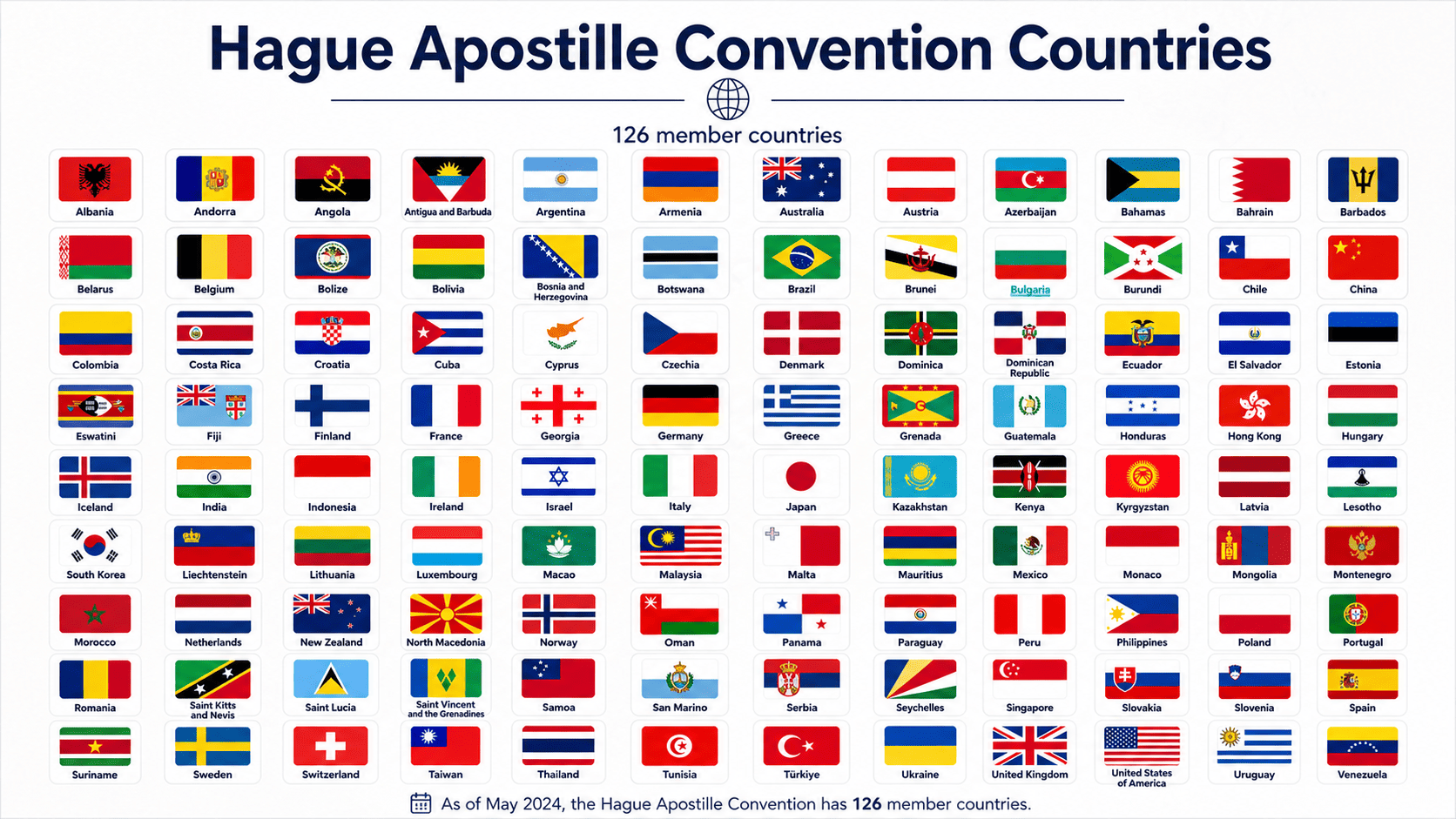
That journey is called consular legalization, and until very recently it was the only way a Korean document could acquire legal life in Vietnam, because Vietnam sat outside the Hague Apostille Convention, the treaty that lets 128 other countries skip most of the trip.
In this guide we’ll cover the Vietnamese embassy legalization process, how KoreanApostille.com makes it easier, and Vietnam’s journey to join the Hague convention and accept apostille over embassy legalization.
Vietnam Trades Embassy Legalization for Apostille
If you have a Korean document that needs to work in Vietnam, such as a diploma for a factory job in Bắc Ninh, a criminal record check for a work permit, a marriage certificate for a spousal visa, you are about to live through one of the more interesting six-week windows in the history of Korean paperwork.
Here’s why. For decades, Vietnam sat outside the Hague Apostille Convention. That meant no shortcuts: every Korean document destined for Vietnam had to climb a three-rung ladder of notarization, ministry authentication, and embassy legalization. On 11 September 2026, that changes. Vietnam becomes the 129th contracting party to the Apostille Convention, and a single apostille certificate will, in principle, replace the whole chain.
Between now and then, though, the old rules still apply. And even after September, the transition will be messier than the press releases suggest. So let’s walk through both worlds.
The Step-by-Step Vietnamese Embassy Legalization Chain
For a document issued in Korea to be usable in Vietnam, it must travel through three distinct authorities, in strict order. Skipping a step means the next authority will refuse the document outright.
- Notarization or Notarized Translation — A Korean notary public certifies the document (skip this step if it is an original issued directly by a government agency or national university, such as a criminal record certificate). Notarized translation is required unless the document is already prepared in either English or Vietnamese.
- Authentication by Korea’s Ministry of Foreign Affairs (MOFA) — MOFA verifies the notary’s or issuing agency’s seal. This step is often loosely (and confusingly) called “getting an apostille,” even though for Vietnam-bound documents it functions as plain consular authentication, not a Hague apostille.
- Legalization by the Vietnamese Embassy in Seoul — The Embassy’s Consular Section reviews the MOFA-authenticated document and affixes its own legalisation stamp, which is the step that actually gives the paper legal force inside Vietnam.
Where the Vietnamese Embassy Fits In
The Embassy of Vietnam in Seoul sits at 123 Bukchon-ro, Jongno-gu, and its Consular Section is reachable at +82-2-739-9399 (Vietnamese/English) or +82-2-725-2487 (Korean). General embassy hours run Monday through Friday, 9:00 a.m. to 5:00 p.m., but the consular counter operates on a tighter and slightly irregular schedule: document intake happens roughly 9:00–12:00 on weekdays (with variations reported across sources, so calling ahead is wise), while completed documents are handed back between 2:30 and 5:00 p.m. The office is closed weekends and on both Korean and Vietnamese public holidays, including Tet and Chuseok, a detail that frequently catches people off guard when they plan around only one country’s calendar.
To apply, applicants typically need the MOFA-authenticated original, a photocopy of that document, a completed embassy application/notarization request form, valid ID (passport, ARC, or Korean driver’s license), and if filing on someone else’s behalf, a handwritten power of attorney plus the agent’s ID copy.
Common Mistakes That Delay Applications
Several recurring mistakes stretch out what should be a straightforward process into weeks of back-and-forth.
1. The document already has stamps on it. This is the sneaky one. If a document has previously been legalized for a different country, carrying, say, another embassy’s endorsement from a prior job application, the Vietnamese Embassy may well decline it. The fix is not to argue; it’s to start clean with a fresh copy and a fresh notarized translation. Frustrating, but cheaper than a rejected work permit file.
2. Names don’t match. The document says one thing; the passport says another. Marriage, naturalization, legal name changes, or simply an inconsistent romanization of a Korean name — any gap needs documentary bridging, such as a name-change certificate, or the chain stalls.
3. Copy versus original confusion. An original public document can often proceed directly. A photocopy or PDF generally cannot. It needs a notarized translation or a certified-copy notarization to become actionable. If you only have a scan, that’s workable, but it changes the route and the cost.
4. The wrong document entirely. Korea issues an intimidating variety of civil-status certificates: 기본증명서, 가족관계증명서, 혼인관계증명서, 수리증명서, each in “일반” and “상세” versions. There’s also a quirk foreigners discover the hard way. A foreign national applying for a Korean marriage certificate may only be able to obtain the specific (특정) version rather than the detailed (상세) one. Confirm with the Vietnamese authority receiving your file which version they need, in writing.
5. Translation into the wrong language or the wrong way. Vietnamese authorities generally accept Vietnamese or English. But if you need an English document translated into Vietnamese, Korean notary offices require a Korean version to be submitted alongside it, because the notary must be able to read what they are certifying. Foreign-to-foreign notarized translation therefore costs roughly double what people expect. Budget for it.
6. Assuming your agent knows what the receiving office wants. No service provider — ours included — can tell you which documents your Vietnamese employer, university, or provincial Department of Justice requires. That question belongs to them. Get their list first; then we can tell you exactly how to get each item legalized.
How Korea Apostille Services Can Help
Given how easily this three-way chain can go wrong, including wrong stamp order, missing translation, an unacceptable power of attorney, or a missed submission window, most individuals and businesses choose not to navigate it solo. Korea Apostille Services specializes precisely in this kind of multi-agency document journey, managing the full sequence from Korean notarization through MOFA authentication to final legalisation at the Vietnamese Embassy on the client’s behalf.
Here’s what that looks like in practice:
Document review before you spend anything. You upload clear scans through our secure link, and we assess what you actually have: public or private issuer, original or copy, existing endorsements, name consistency. This review is where most problems get caught before they become a rejection.
Document procurement. Need a family relation certificate, basic certificate, marriage certificate, or certificate of alien registration but you’re no longer in Korea? We can obtain many Korean civil-status and immigration records on your behalf.
Notarized translation. Korean to English, Korean to Vietnamese, English to Vietnamese — including the Korean-language version that notary offices require for foreign-to-foreign work.
Notarization, MOFA authentication, and Embassy legalization, managed end to end. We hold the Embassy appointments, make the trips, and deal with the Monday-to-Thursday morning window so you don’t have to.
Worldwide delivery of the finished originals, included.
Because documents can also be submitted and returned by registered mail rather than in person, this kind of service is especially useful for anyone based outside Seoul, for companies managing multiple employees’ paperwork at once, or for anyone who simply cannot afford the round-trip to Jongno-gu and Seocho-gu during a narrow weekday intake window.
Information current as of July 2026. Embassy hours, appointment systems, and requirements can change; always confirm with the Vietnamese authority receiving your documents which format and version they require.
Interested in a comprehensive guide, check out our article on Embassy Legalisation of Korean Documents: The Complete Guide for Non-Hague Countries (UAE, Saudi Arabia, Kuwait, Thailand, Vietnam & More)