

If you live in South Korea now or lived here at any point as a registered foreigner, there’s one document you may suddenly need years later and have no idea how to get: the Certificate of Foreign Resident Registration, known in Korean as 외국인등록사실증명 (oe-guk-in deung-nok sa-sil jeung-myeong).
This guide explains what the certificate is, who needs it, exactly how to get it whether you’re in Korea or overseas, and how to have it translated, notarized, and apostilled so it’s accepted by authorities outside Korea.
What Is the Certificate of Foreign Resident Registration (외국인등록사실증명)?
The Certificate of Foreign Resident Registration is an official document issued by the Korea Immigration Service under the Immigration Act. It certifies that you completed alien registration in South Korea and shows your resident registration details, including your name, date of birth, nationality, alien registration number (외국인등록번호), visa status history, and registered addresses during your stay.
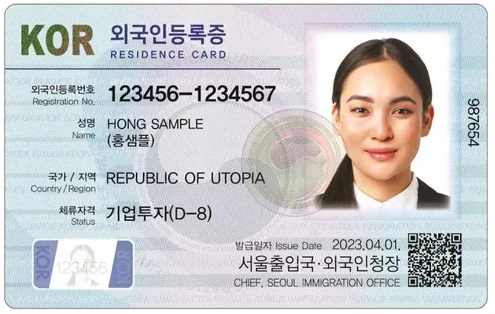
Think of it as the foreigner’s equivalent of the resident registration extract (주민등록등본) that Korean citizens use. In fact, Korean law allows the 외국인등록사실증명 (or your Alien Registration Card) to substitute for resident registration documents in legal procedures and transactions that would normally require them.
Important for former expats: if your resident registration was cancelled because you permanently departed Korea, the certificate can still be issued and marked as a “registration expired” (과거체류자), as long as your record remains retrievable in the immigration information system. This makes it one of the few official documents that proves your past residence in Korea long after you’ve left.
Who Needs the Certificate of Foreign Resident Registration?
Based on the hundreds of inquiries we handle at KoreanApostille.com, these are the most common reasons current and former expats request this certificate:
- Recovering other Korean records. This is the big one. Many Korean civil documents such as a Marriage Relation Certificate (혼인관계증명서) require a Korean Resident Registration Number or your ex-spouse’s family registry details to retrieve. If you don’t have those, your own alien registration record is often the key that unlocks the rest.
- Divorce, annulment, remarriage, and inheritance proceedings abroad that require proof of your legal residence or marital history in Korea.
- Korean National Pension refunds and severance claims after leaving Korea.
- Banking and finance: Reactivating or closing Korean bank accounts, or proving identity when your Korean phone number is no longer active.
- Immigration applications in other countries that ask for proof of all prior residences.
- Real estate transactions and property registration matters in Korea.
- Visa and residency applications where your Korean stay history must be documented.
How to Get the Certificate of Foreign Resident Registration If You’re Currently in Korea
If you’re still in Korea with a valid Resident Registration Card (ARC), the process is straightforward.
Option 1: Online via Government24 (정부24)
You can apply for and print the Certificate of Certificate of Foreign Resident Registration (외국인등록사실증명) online through the Government24 portal (정부24), 24 hours a day. You need a Korean joint certificate (공동인증서) or Digital ONE Pass registered in your name, plus a connected printer. If the system displays an error message saying online issuance isn’t possible for your record, you’ll need to visit an office in person.
Option 2: In Person
Visit any of the following with your ARC or passport:
- An Immigration Office (출입국·외국인청 or 출입국·외국인사무소, including branch offices)
- Your local city, county, or district office (시·군·구청)
- An eup/myeon/dong community service center (processed as a fax civil petition)
How to Get the Certificate of Certificate of Foreign Resident Registration From Abroad
Here’s where things get difficult and where most former expats hit a wall.
The certificate cannot be issued remotely by simply emailing scans of your old ARC and passport to an immigration office. And the online route through Government24 usually fails for people overseas because it requires a Korean digital certificate, which in turn requires an active Korean phone number, something most people lose when they leave the country.
That leaves two realistic paths:
1. Visit a Korean Embassy or Consulate
Some Korean diplomatic missions can assist with fact-certificate requests or advise on alternatives, but availability varies widely by mission, and many former residents are redirected back to Korea. Always confirm with your nearest embassy or consulate first.
2. Authorize Proxy Issuance Through a Power of Attorney
Korean immigration regulations allow a designated proxy in Korea to obtain the certificate on your behalf. This is the fastest reliable route for anyone who can’t travel to Korea. You’ll typically need to provide:
- A copy of your passport
- A copy of your Alien Registration Card (front and back) — even an expired one
- Your contact information
- A signed power of attorney (위임장), which in many cases must bear a personal seal (도장); your service provider can confirm whether a signature can substitute and arrange seal production if required
At KoreanApostille.com, we handle this entire process remotely. We provide the power-of-attorney template, obtain the Certificate of Foreign Resident Registration (외국인등록사실증명) on your behalf, and deliver it anywhere in the world. You never need to set foot in Korea.
Using the Certificate Abroad: Translation, Notarization, and Apostille
The certificate is issued in Korean. Foreign courts, immigration authorities, banks, and pension agencies almost always require two additional steps before they’ll accept it:
Step 1: Notarized English Translation
A notarized translation (번역공증) converts the document into English (or another target language) with a notary’s certification of accuracy. Self-translations are routinely rejected by foreign authorities.
Step 2: Apostille
South Korea is a member of the Hague Apostille Convention, so Korean public documents, including the 외국인등록사실증명 can be authenticated with an apostille issued by the Korean Ministry of Foreign Affairs (MOFA) or Ministtry of Justice. Once apostilled, the document is legally recognized in all 120+ Hague member countries without further embassy legalization.
If your destination country is not a Hague member (for example, the UAE, Vietnam, or Canada for certain document types), you’ll need embassy or consulate legalization in Seoul instead of an apostille.
The complete remote workflow of KoreanApostille.com looks like this:
- Proxy issuance of the 외국인등록사실증명 via power of attorney
- Notarized translation into English or any other language
- Apostille (or embassy legalization for non-Hague countries)
- International courier delivery to your door
KoreanApostille.com manages all four steps as a single service, with English-speaking support throughout, which is exactly why expats and former residents choose us over navigating Korean bureaucracy alone from twelve time zones away.
Frequently Asked Questions
Can I get the Certificate of Foreign Resident Registration (외국인등록사실증명) if I left Korea years ago?
Yes, in most cases. As long as your alien registration record is still retrievable in the immigration system, the certificate can be issued with a “former resident” (과거체류자) or “Registration Expired” notation, even if your resident registration was cancelled upon final departure. Records from decades ago may require additional verification.
Can I apply online from outside Korea?
Usually not. Online issuance through Government24 requires a Korean joint digital certificate (공동인증서), which most people lose access to after leaving Korea. Proxy issuance via power of attorney is the standard workaround.
How long does it take?
In person in Korea: same day. Via proxy from abroad: typically a few business days for issuance, plus additional time for notarized translation, apostille, and international shipping.
Is the certificate issued in English?
No, it’s issued in Korean. For use abroad, pair it with a notarized English translation and an apostille.
What’s the difference between the Certificate of Foreign Resident Registration (외국인등록사실증명) and the Certificate of Entry and Exit (출입국에 관한 사실증명)?
The Certificate of Foreign Resident Registration proves your resident registration (visa status, resident registration number, addresses). The Certificate of Entry and Exit proves your border crossings (dates you entered and left Korea). Foreign authorities sometimes require both, so confirm which one your receiving agency needs before applying.
My name or details have changed since I lived in Korea. Is that a problem?
It can complicate matching your record. Provide documentation of the name change (marriage certificate, deed poll, etc.) along with your old ARC and passport copies so the record can be located and verified.
Check out our blog for information on How to Obtain and Apostille a Korean Marriage Certificate or Divorce Certificate!