What Is an Apostille and Why Do You Need One for your Korean University Degree?
An apostille is an official certification that verifies the authenticity of a public document, making it legally recognized in countries that are signatories to the 1961 Hague Apostille Convention. Rather than requiring full embassy legalization for each receiving country, a single apostille stamp from the issuing country’s designated authority is sufficient. South Korea joined the Hague Apostille Convention in 2007 and has been issuing apostilles since then.
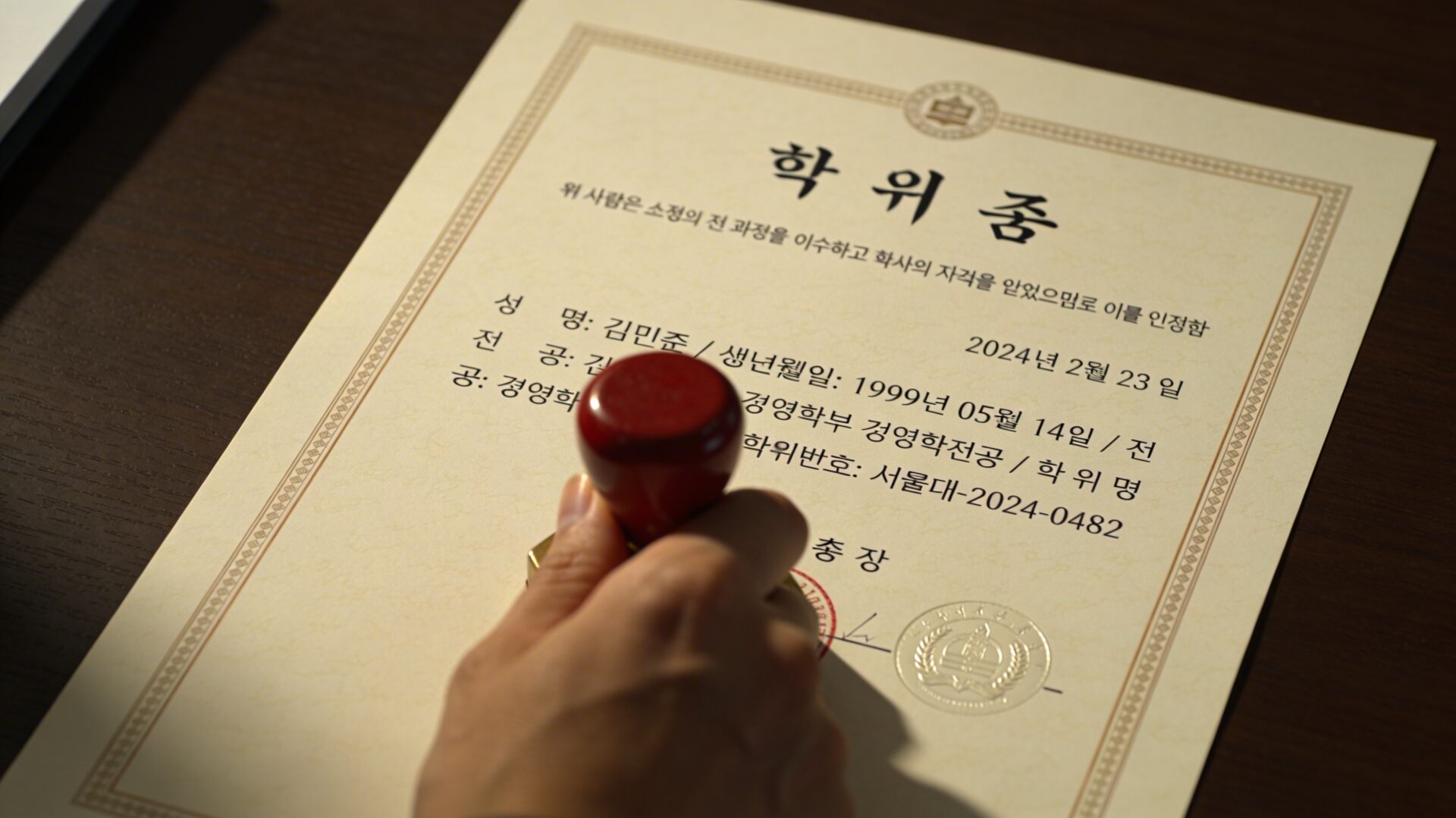
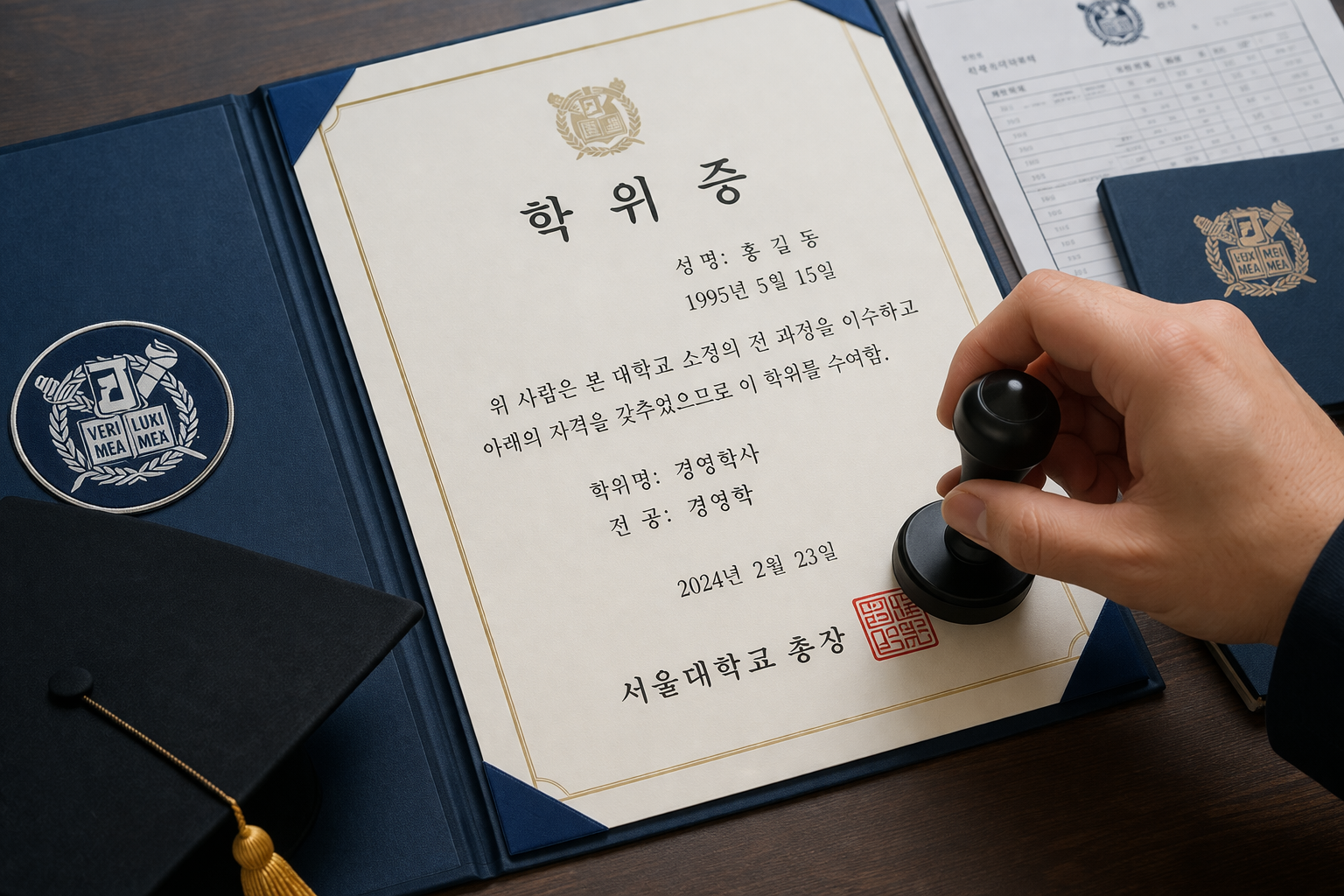
For Koreans and international students alike, an apostille on a Korean university diploma, degree certificate or transcript is frequently required for graduate school applications abroad, employment sponsorships, immigration processes, visa applications, and professional licensing overseas. Korean universities, immigration agencies, and government institutions in many countries specifically require apostilled academic credentials before recognizing them as valid.
For more information, check out our article on Apostille vs Legalization Services
Who Issues Apostilles in South Korea?
In South Korea, only central government authorities, not local city offices, can issue apostilles. There are two main competent authorities depending on the type of document:
| Authority | Document Types |
| Ministry of Foreign Affairs (MOFA) | Most administrative and academic documents, including diplomas and transcripts from universities |
| Ministry of Justice | Court-related documents, notarial acts, legal certificates, and official certificates on private documents |
| National Court Administration | Documents originating from courts and tribunals |
For academic credentials such as diplomas and transcripts issued by Korean universities, the Ministry of Foreign Affairs is the issuing authority.
Important Update (June 2024): As of June 2024, the policy was updated so that documents issued by national public universities (국공립대학교) can receive an apostille directly on the original without prior notarization. However, documents from private universities (사립대학교) still require notarization first.
National University vs Private University: Which Process Applies to You?
This is one of the most critical distinctions in the Korean apostille process for academic documents:
- National/Public Universities (국공립대학교): Documents (diplomas, transcripts, degree certificates) are considered official public documents. As of June 2024, they can be apostilled directly with no notarization required.
- Private Universities (사립대학교): Documents are considered private documents, not government-issued public documents. They must be notarized (공증) at a notary public office before being eligible for an apostille.
- Private Elementary/Middle/High Schools: These are treated differently as they are licensed by the Ministry of Education and considered quasi-public, their documents can be apostilled without notarization.
Step-by-Step Guide to Obtain Apostille in Korea
Step 1 — Obtain the Original Document from Your University
Request an official copy of your diploma (학위증) or academic transcript (성적증명서 / 졸업증명서) directly from your university’s Registrar or Academic Affairs Office. Key points:
- Request the document in English if submitting to an English-speaking country, or in the language required by the destination institution
- If you only have your original diploma and do not wish to risk losing it, request a certified copy sealed by the university’s registrar
- Documents must typically be issued within 6 months of submission, depending on the receiving institution’s requirements
Step 2 — Notarize Your Document (Private University Graduates Only)
If you graduated from a private university, your diploma or transcript is classified as a private document and must be notarized before applying for an apostille.
How to get notarized:
- Visit a licensed notary public office (공증사무소). You can find a registered notary through the Korean Notary Association website (koreanotary.or.kr)
- Bring your ID (passport or Korean national ID) and the document to be notarized
- The notary will certify the document as an authentic copy of the original. Do not submit the original diploma if you wish to keep it
- Cost: approximately 25,000–53,000 KRW per document, depending on the notary office
- Processing time: approximately 20–30 minutes
Notarized Translation (번역공증): If the destination country requires the document in a non-Korean language (e.g., French, Spanish, German, etc.), you must also have the notarized translation at a notary office. The notarized translation can then receive its own apostille.
Step 3 — Prepare Your Application Documents
Before visiting the apostille office, prepare the following:
- The original (or notarized) document to be apostilled
- A completed Apostille Application Form (available for download at apostille.go.kr or at the counter)
- Your passport and/or Korean national ID for identification
- Electronic revenue stamp (수입인지): 1,000 KRW per document (cash only; available at the office)
Step 4 — Visit the Apostille Office
The Overseas Koreans Service Support Center (재외동포서비스지원센터) handles apostille and consular confirmation services. Since June 5, 2023, the office relocated to:
Twin Tree Tower A, 15th Floor
6 Yulgok-ro, Jongno-gu, Seoul
Tel: 02-6747-0404
Hours: Monday–Friday, 09:00–18:00 (excluding public holidays)
Directions: Take Subway Line 3 to Gyeongbokgung Station (Exit 6), or Subway Line 5 to Gwanghwamun Station (Exit 2).
At the office:
- Take a waiting number from the kiosk:
- Press button 2 for documents that do not need notarization (national university documents)
- Press button 3 for documents that have been previously notarized (private university documents)
- Submit your application form, document, and ID when called
- Pay the 1,000 KRW stamp fee per document
Timing tip: Arrive before 1:00 PM. Documents submitted before 14:30 are generally issued the same day (at least 30 minutes after submission). Documents submitted after 14:30 will be ready from 09:30 the following business day.
Step 5 — Processing Time
- Standard processing: Apostilles are usually processed within the same day if submitted before 14:30, or within 3 business days at most
- Extended processing: In some cases, verification may take up to 7 business days if further checks are needed
- Mail applications: Also accepted, but processing time is longer
Step 6 — Collect or Arrange Delivery
Pick up your apostilled document in person at the 15th floor counter, or arrange for international delivery through a courier service such as DHL if you are abroad.
Documents Checklist for Korean University Diploma/Transcript Apostille
| Document | National University | Private University |
| Original diploma or certified copy | Required | Required (notarized copy recommended) |
| Official transcript | Required | Required (must be notarized first) |
| Apostille Application Form | Required | Required |
| Passport / National ID | Required | Required |
| Revenue stamp (1,000 KRW/doc, cash) | Required | Required |
| Notarization (공증) | Not required (as of June 2024) | Required |
| Translation (if needed) | Optional | Optional (must also be notarized) |
How to Get Your Korean Diploma Apostilled From Abroad — KoreanApostille.com
For those living outside Korea, those who find Korean bureaucracy difficult to navigate, or those who simply want a faster, stress-free experience,
KoreanApostille.com offers a fully remote, end-to-end apostille service for Korean-issued documents, including academic diplomas and transcripts.
Korean Apostille Service
KoreanApostille.com is an English-speaking professional service that specializes in authenticating Korean documents for international use. Their services include:
- Apostille for academic credentials: Diplomas, degree certificates, and transcripts from Korean universities
- Notarized translation: They handle all necessary Korean-English, English-Korean, and Korean-other languages notarized translations using licensed Korean notaries, which is critical for private university graduates
- Embassy Legalization: For countries not in the Hague Apostille Convention (e.g., China, Canada), they can also handle full embassy legalization
- Secure International Delivery: All documents are shipped via guaranteed EMS or DHL international delivery
How the KoreanApostille.com Process Works
- Contact and Consultation: Reach out via info@koreanapostille.com or through their website to describe your document needs
- Document Retrieval: You can send the original documents to them or upload a scanned copy of your documents (only when notarized translations is included)
- Authentication & Apostille: Their team handles all apostille steps using licensed Korean notaries, particularly important for private university documents
- International Shipping: Once apostilled, your documents are securely shipped to your address anywhere in the world via EMS or DHL
Who Should Use KoreanApostille.com
- Koreans living abroad who cannot return to Korea to process documents in person
- International students who attended Korean universities and need apostilled credentials for graduate school or employment overseas
- Businesses handling international contracts or expanding globally that need Korean corporate and academic documents authenticated
- Anyone who wants to avoid navigating language barriers and Korean government procedures
Contact: info@koreanapostille.com | Website: koreanapostille.com
What If the Destination Country Is NOT in the Hague Convention?
Not all countries accept apostilles. Countries not part of the Hague Apostille Convention (such as China and Canada) require a different process called Embassy Legalization.
The embassy or consular legalization process involves two steps:
- The document is authenticated by South Korea’s Ministry of Foreign Affairs
- The receiving country’s embassy or consulate in Korea provides its own consular confirmation
KoreanApostille.com also handles embassy legalization for non-Hague countries as part of their service offering.
Common Mistakes to Avoid
- Notarizing originals you can’t replace: Always request a certified copy of your diploma and notarize the copy, not the original
- Confusing notarization with apostille: These are two different steps. Notarization verifies the document at a notary public; the apostille is issued by MOFA. Both may be required
- Wrong office: Only central government offices (MOFA, Ministry of Justice) issue apostilles, not local district offices or city halls
- Assuming e-Apostille works for diplomas: The online system does not currently cover university diplomas and transcripts. In-person or agency submission is required
- Not checking destination requirements: Always confirm with the receiving institution whether they need a Korean translation, English version, or both.
Frequently Asked Questions: Korean Degree Certificate & Transcript Apostille
How long is an apostilled document valid?
Most institutions accept apostilled documents issued within the past 6 months to 1 year of submission. Always confirm validity requirements with the receiving institution before applying.
Can someone else apply on my behalf?
Yes. You can authorize a representative (대리인) with a signed power of attorney to submit the application. They must bring their own ID and your authorization letter.
Can I get an apostille on a diploma issued by a foreign university for use in Korea?
No. The Korean apostille system only authenticates documents issued by Korean authorities. For foreign university documents, the apostille must be obtained from the issuing country’s designated authority.
What if my Korean university diploma is only in Korean?
If the destination country requires the document in another language, request for a notarized translation, and then apply for a separate apostille on the notarized translation.
Is the apostille the same as embassy certification?
No. An apostille replaces the need for embassy certification among Hague Convention member countries. For non-member countries, embassy legalization through the relevant embassy is still required.
Key Contacts and Resources
| Resource | Details |
| Apostille Office (Seoul) | Twin Tree Tower A, 15F, 6 Yulgok-ro, Jongno-gu, Seoul |
| Phone | 02-6747-0404 |
| Hours | Mon–Fri 09:00–18:00 |
| E-Apostille Portal | apostille.go.kr |
| MOFA General Website | 0404.go.kr |
| Professional Service | KoreanApostille.com — info@koreanapostille.com |
| Korean Notary Association | koreanotary.or.kr |